thetrading.tools23 letters
Market signals, breadth, volatility and leverage: what the tape is doing and what followed the last time it did this.
Every letter from the three publications, newest first.
Market signals, breadth, volatility and leverage: what the tape is doing and what followed the last time it did this.
The AI build-out read from the filings: who is spending, how it is financed and what the public data says about the demand behind it.
Company financials from every 10-K and 10-Q: earnings surprises, small caps and value, with the numbers behind each one.
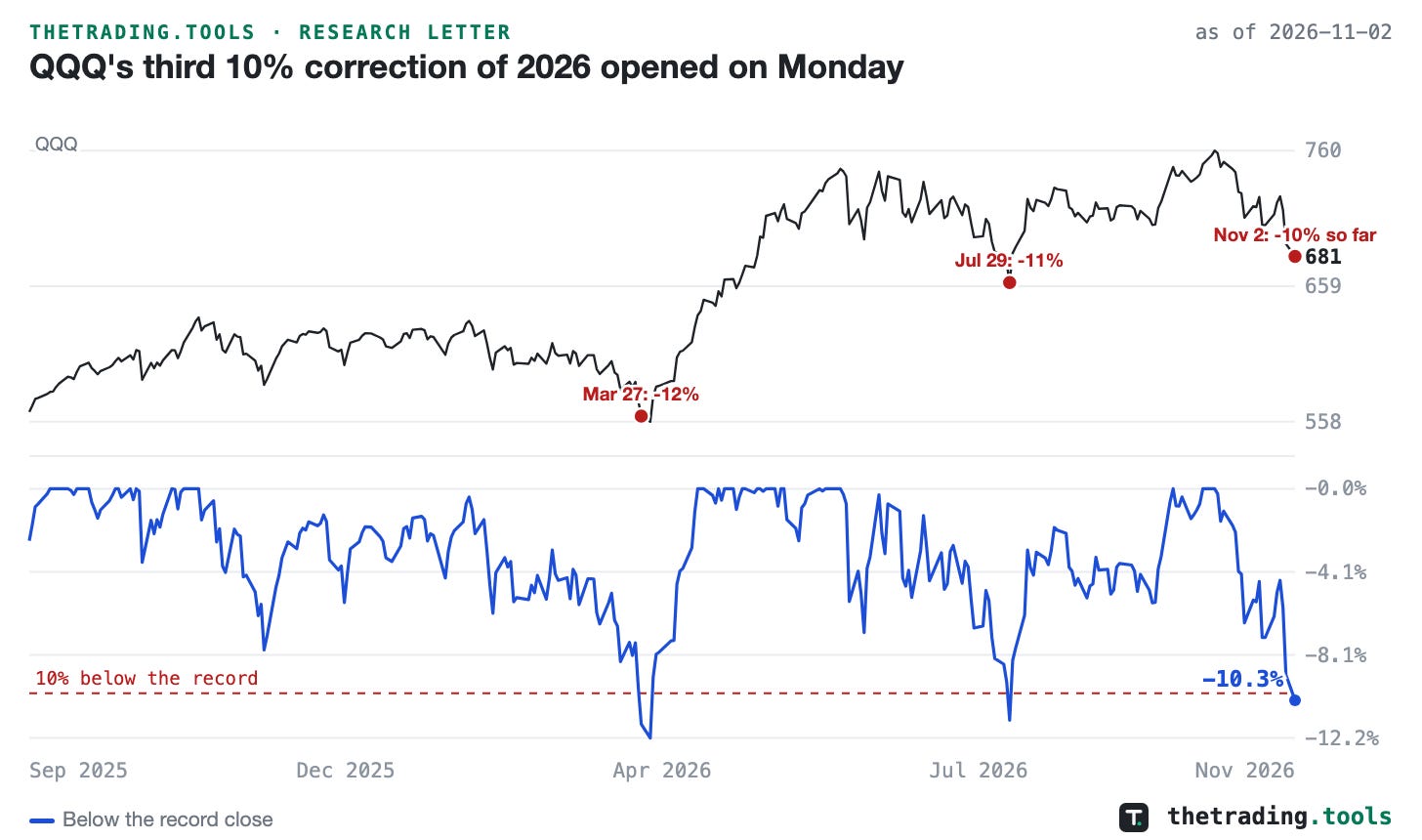
Every one of this year's three dips began at a record. What QQQ did in the month, the quarter and the year after the third correction in each of those seven years, and which ones this year resembles.
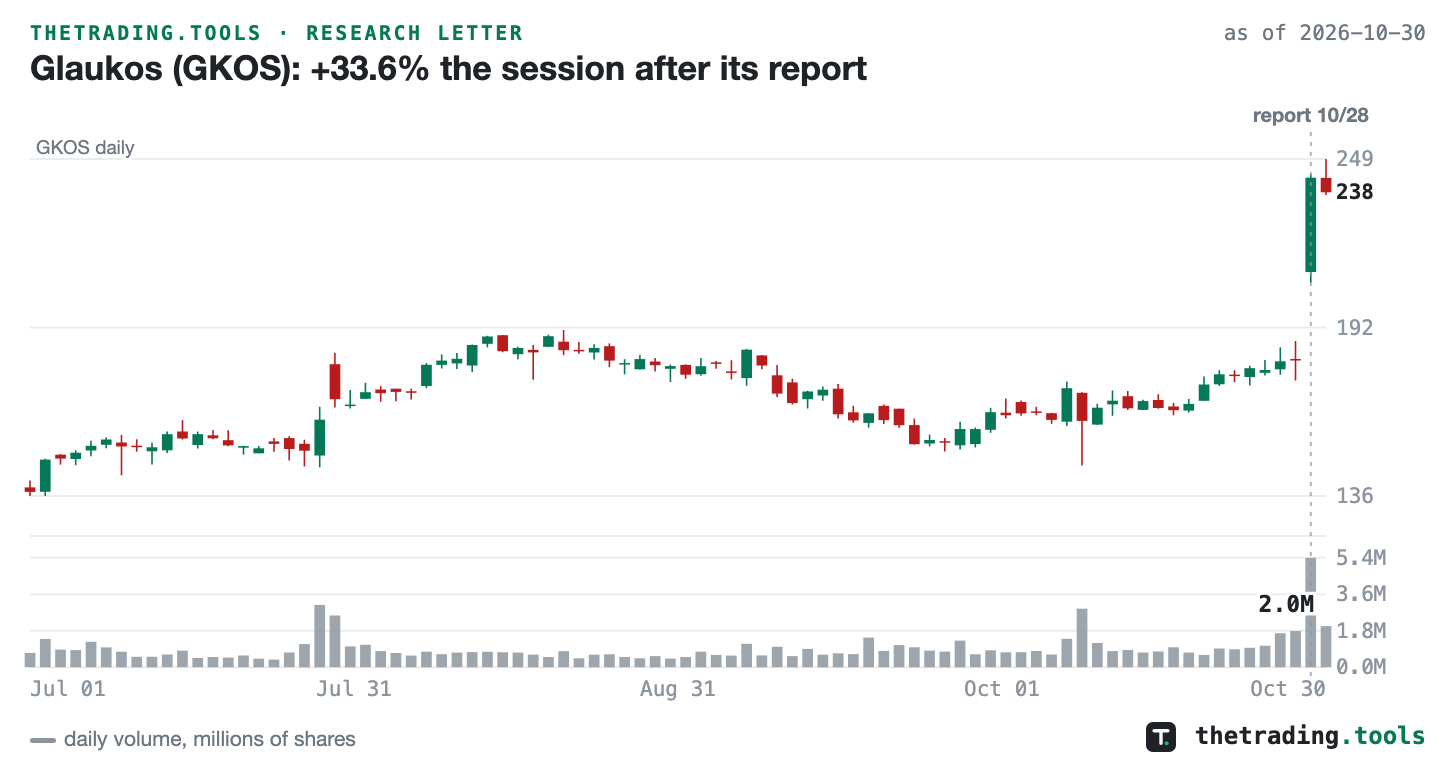
The week's headlines were about the capex trade breaking. Underneath, ten companies beat, most raised their year, and the market paid them for it the next morning.
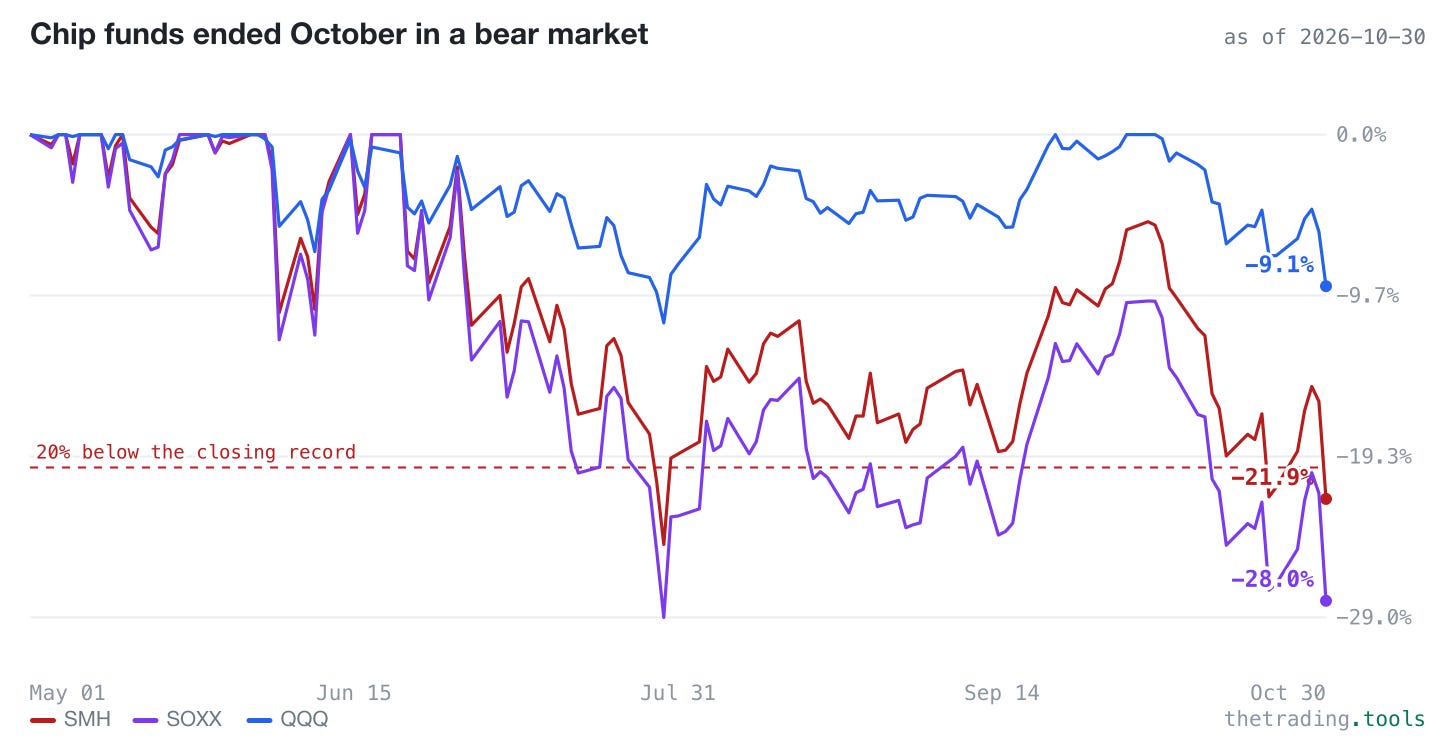
Chips are in a bear market and the Nasdaq reversed from a record, while nine of eleven sectors gained. Which side gives way first decides November.
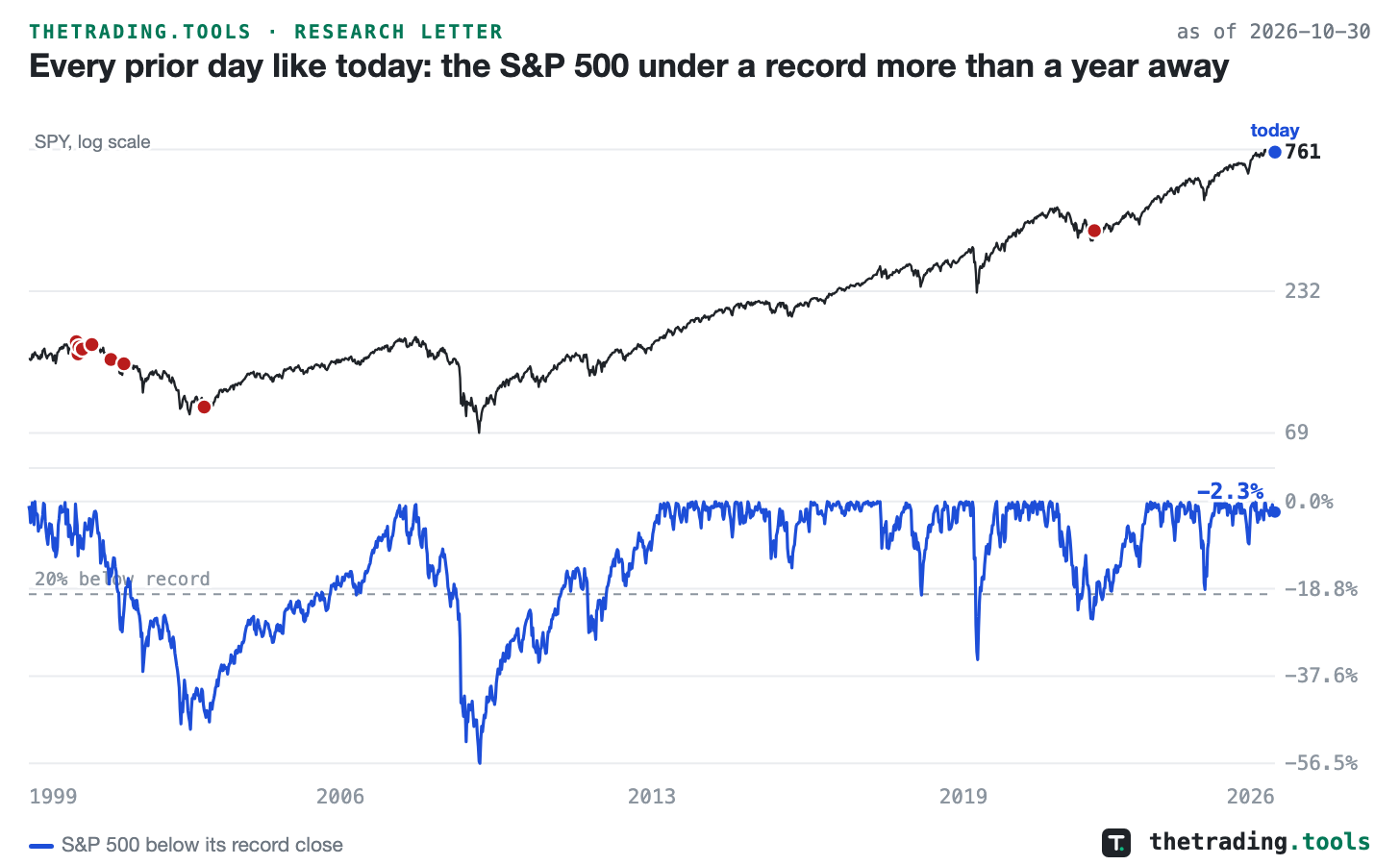
Nine prior mornings since 1999 opened the way Friday did. Every one came with the S&P 500 below a record it would take more than a year to regain. What that does and doesn't tell you.
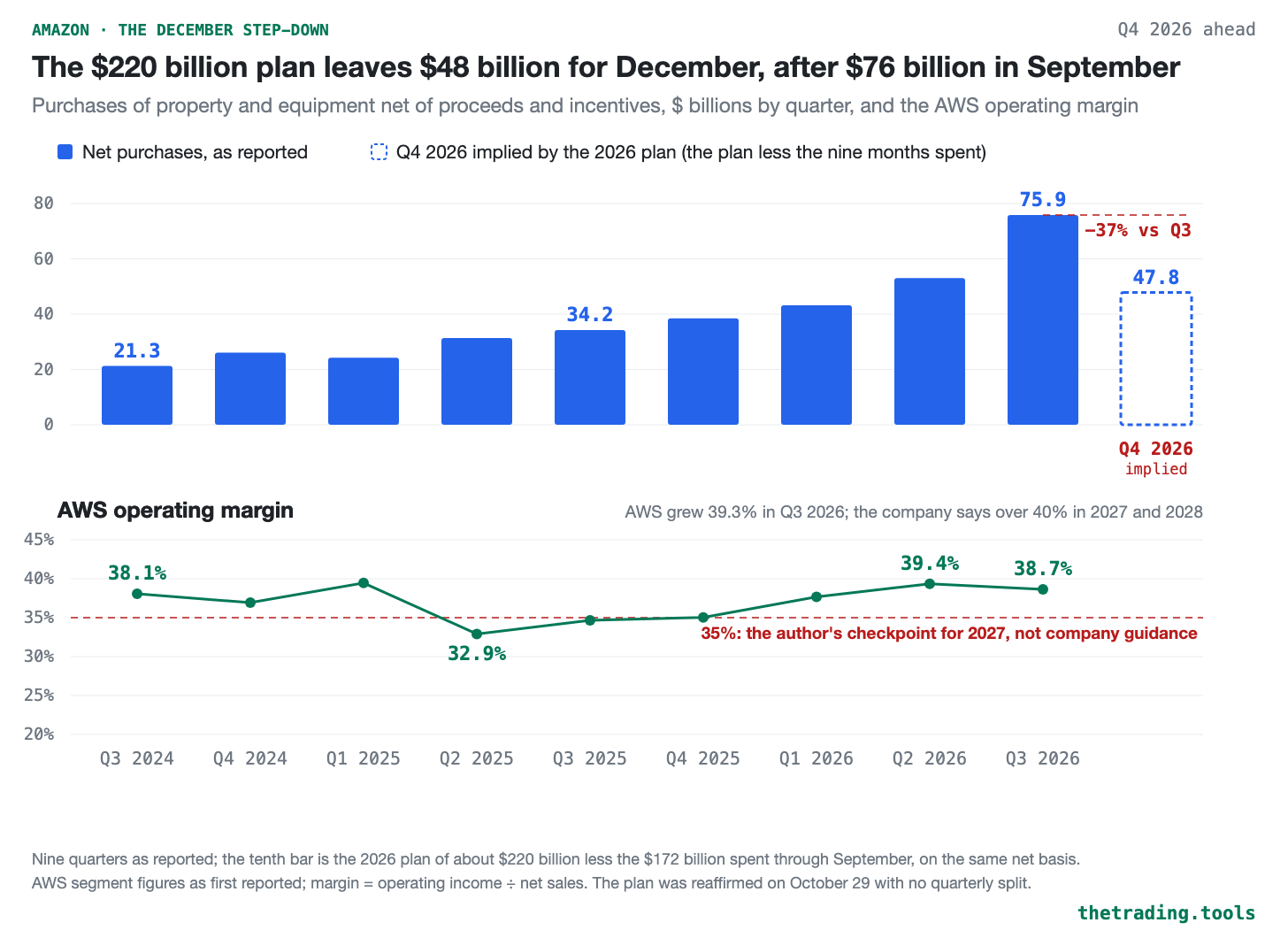
AWS grew 39% at a 38.7% margin and the stock fell 11% in two days. The spending plan Amazon reaffirmed implies a December quarter 37% below September's. My read on whether that holds.
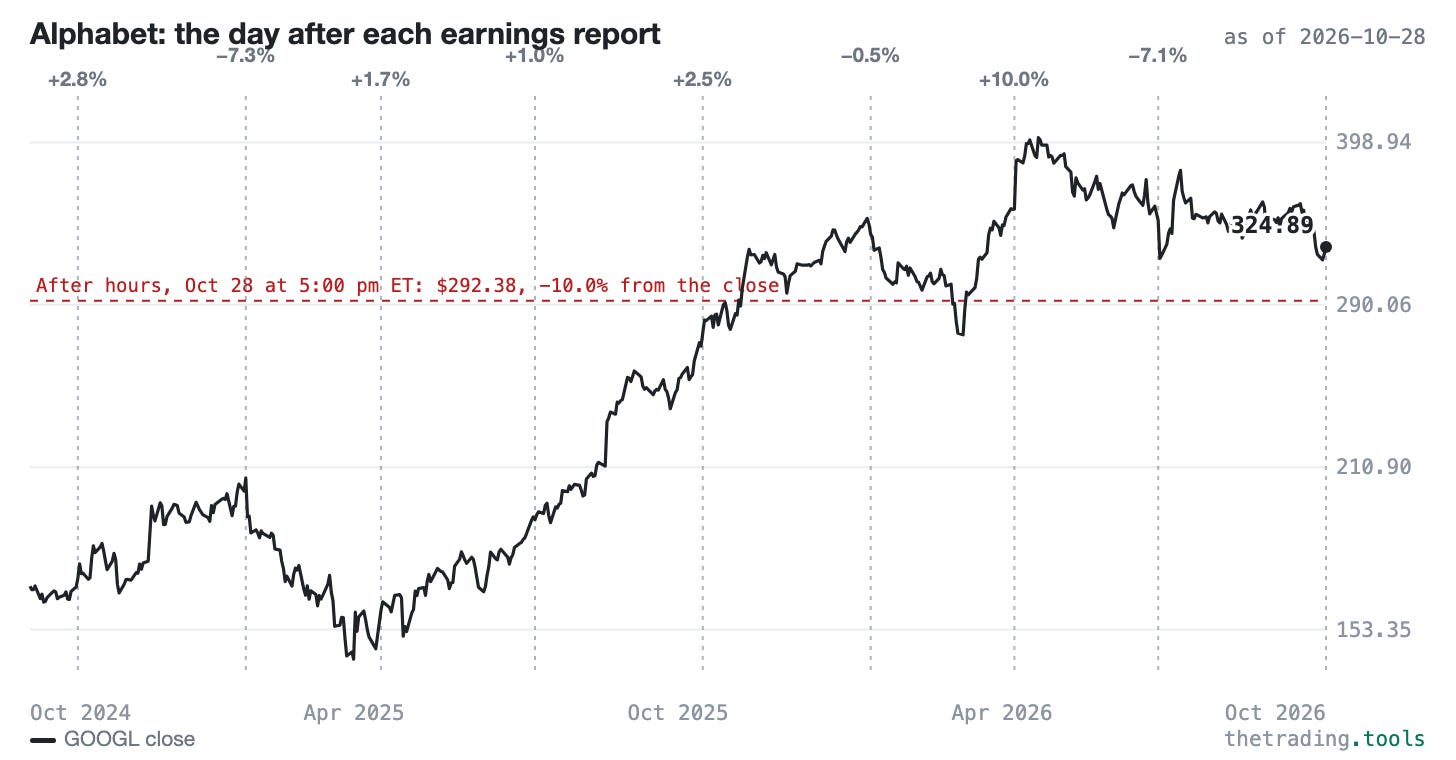
Cloud doubled, and Alphabet still spent $9 billion more than it generated. My read on what Wednesday's report changed, and the December-quarter cash test that will settle it.
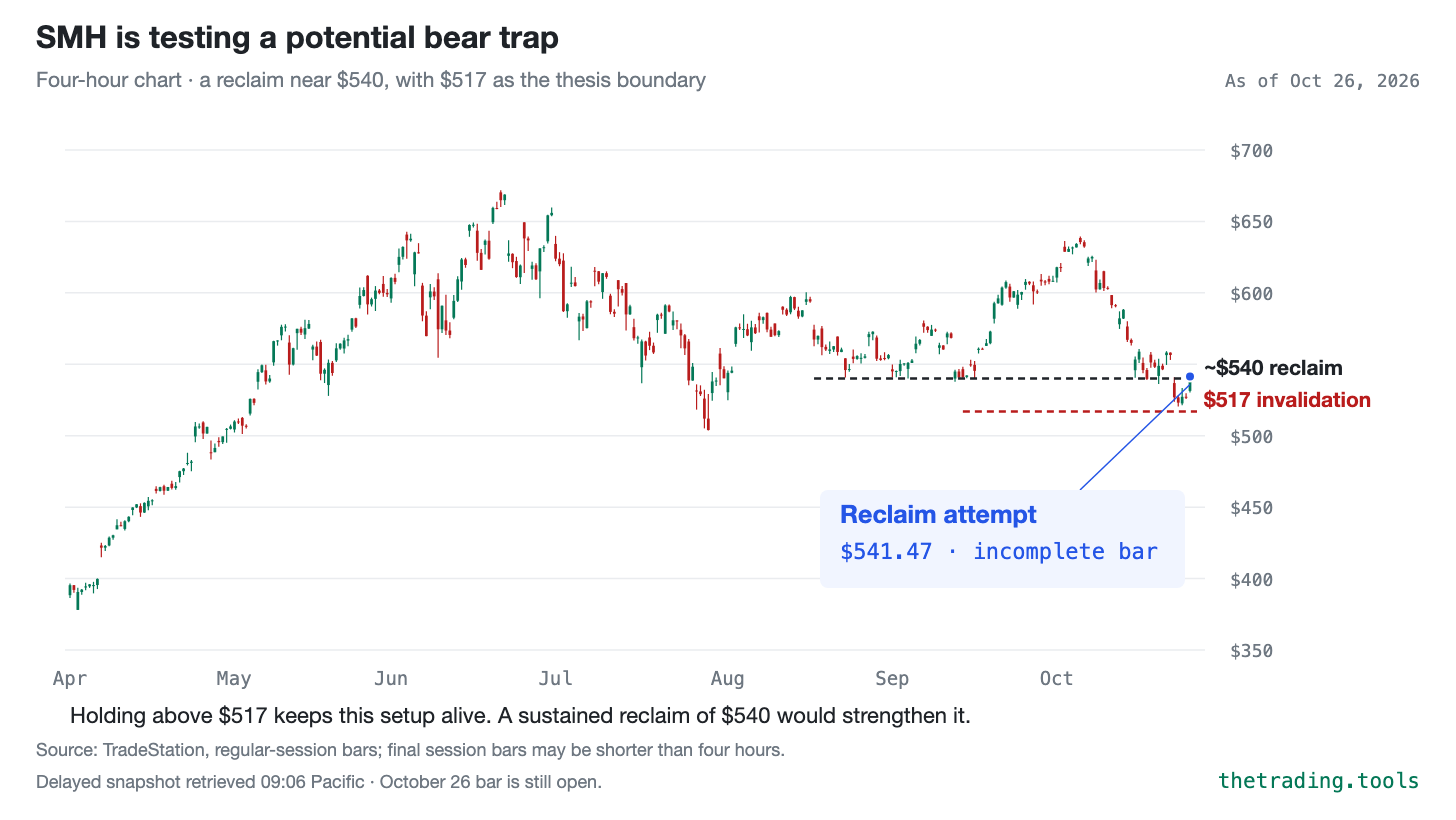
A failed breakdown could give semiconductors room to recover. My line in the sand is $517.
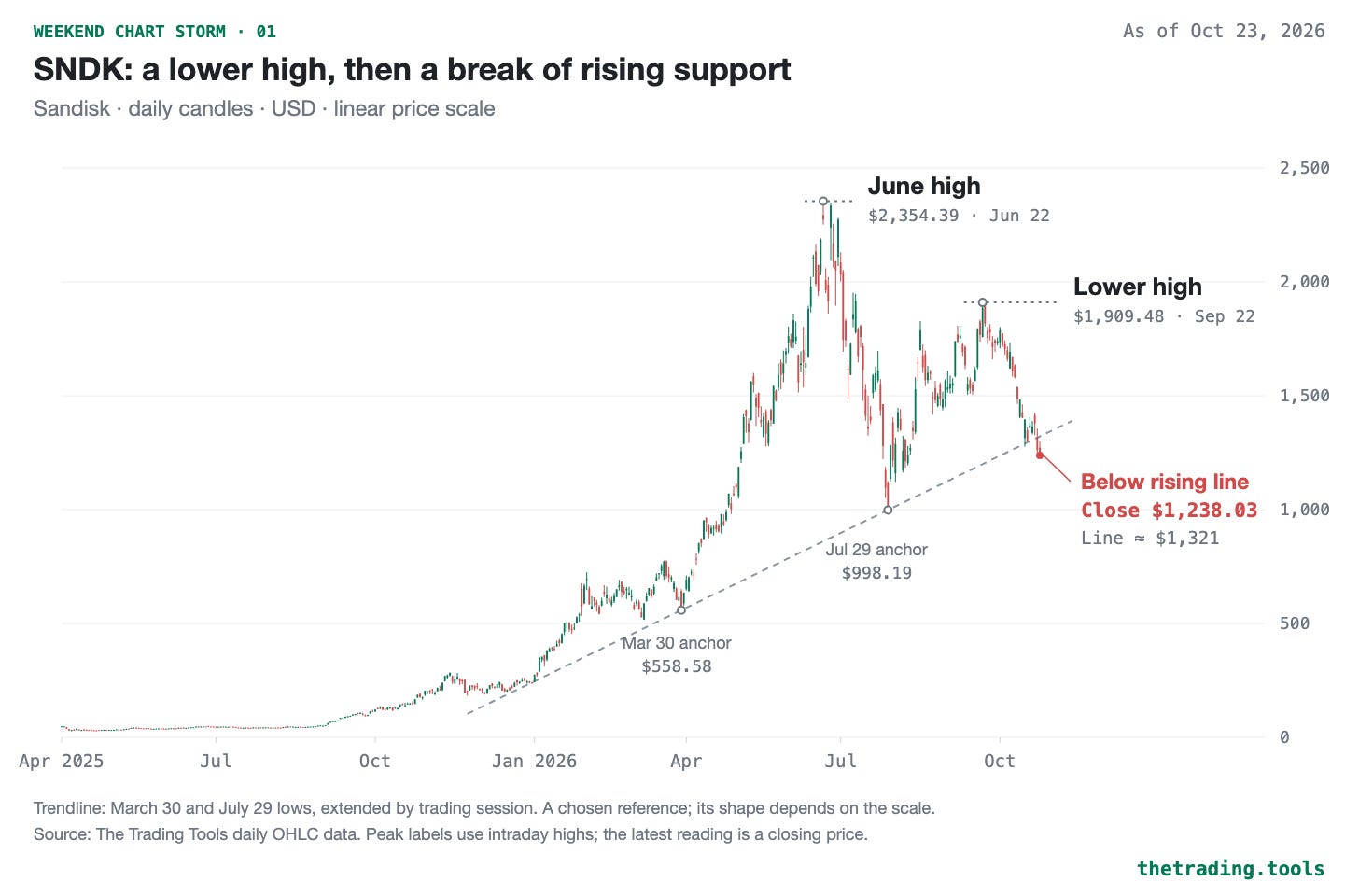
The charts I’m watching, the levels that matter, and what would change my read.
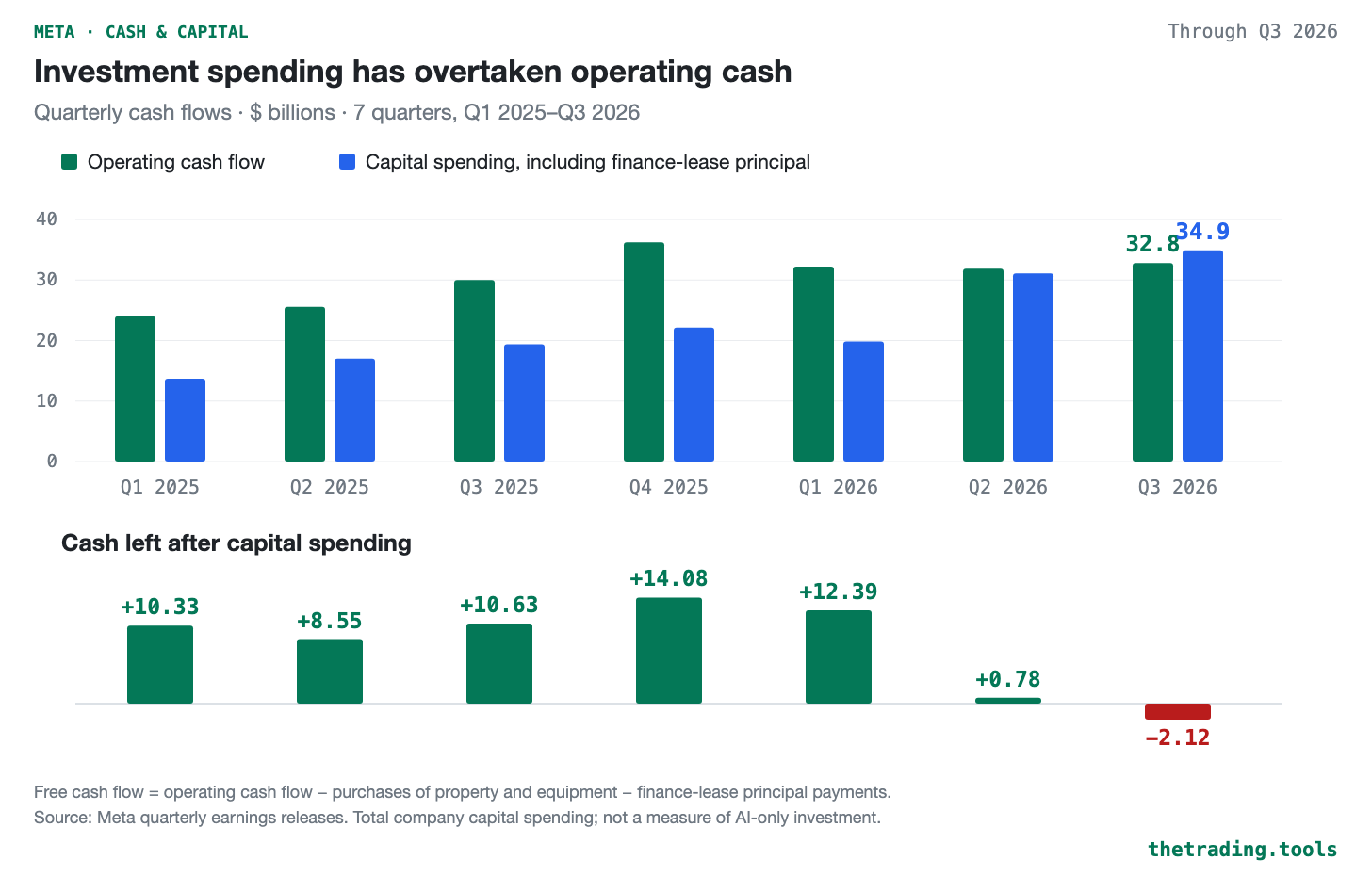
Free cash flow turned negative while advertising kept growing. The next earnings report will test how much of Meta’s ambition the business can finance.
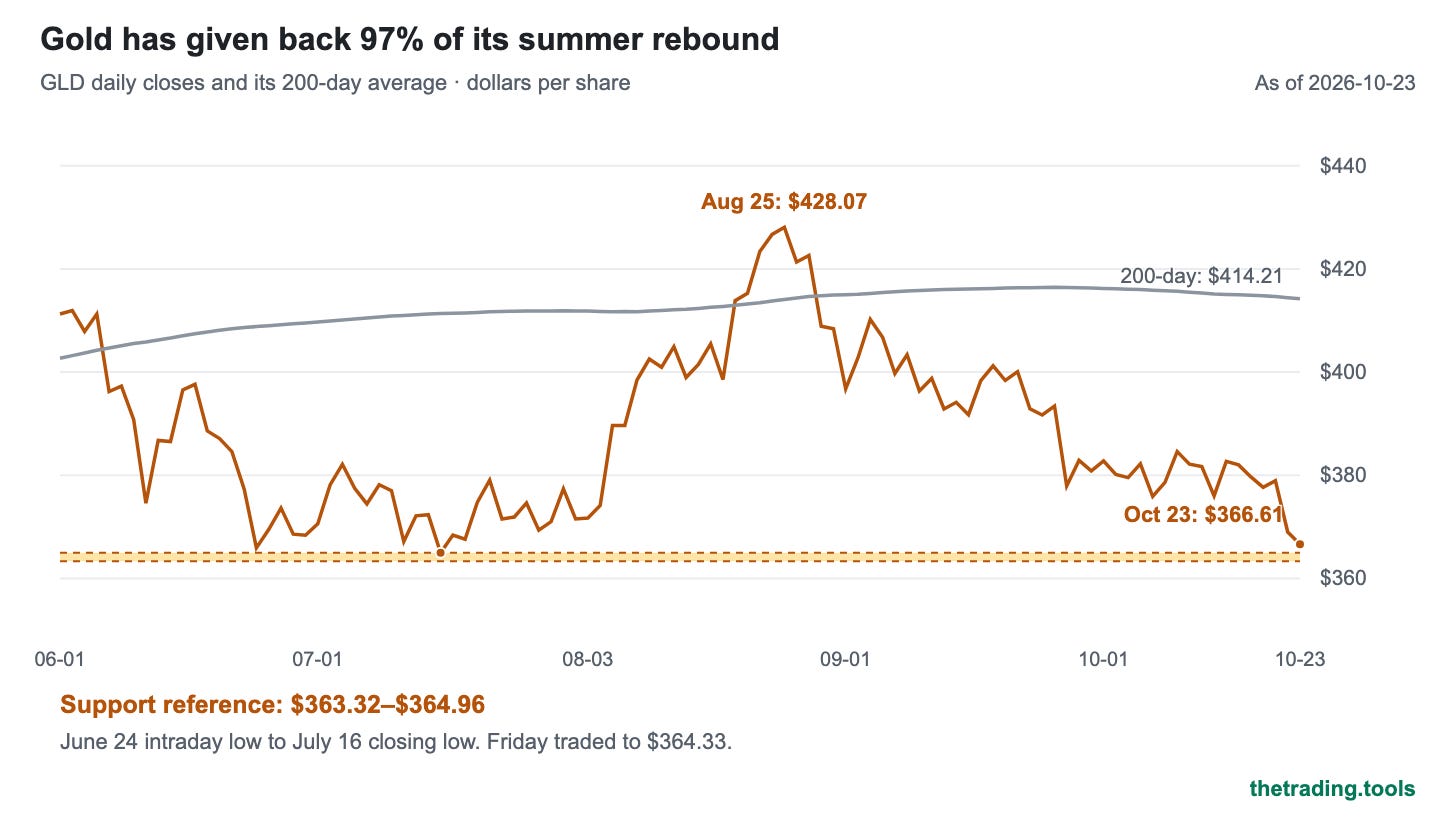
A $1.86 million put trade meets a serious long-term buying case. What beaten-down miners and persistent demand tell us about the next test of support.
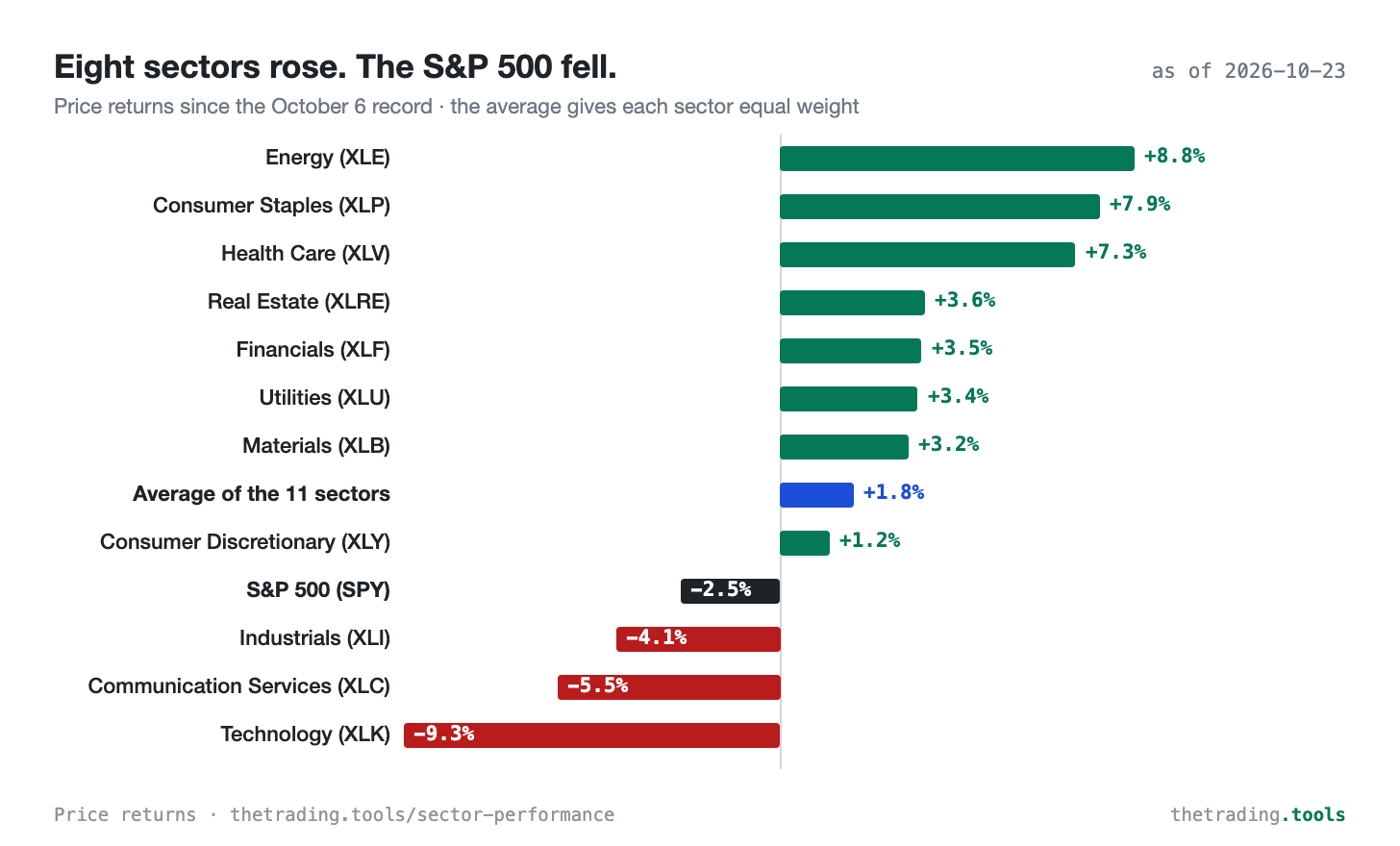
Technology is pulling the index lower. The uncomfortable question is what the winners are telling us.
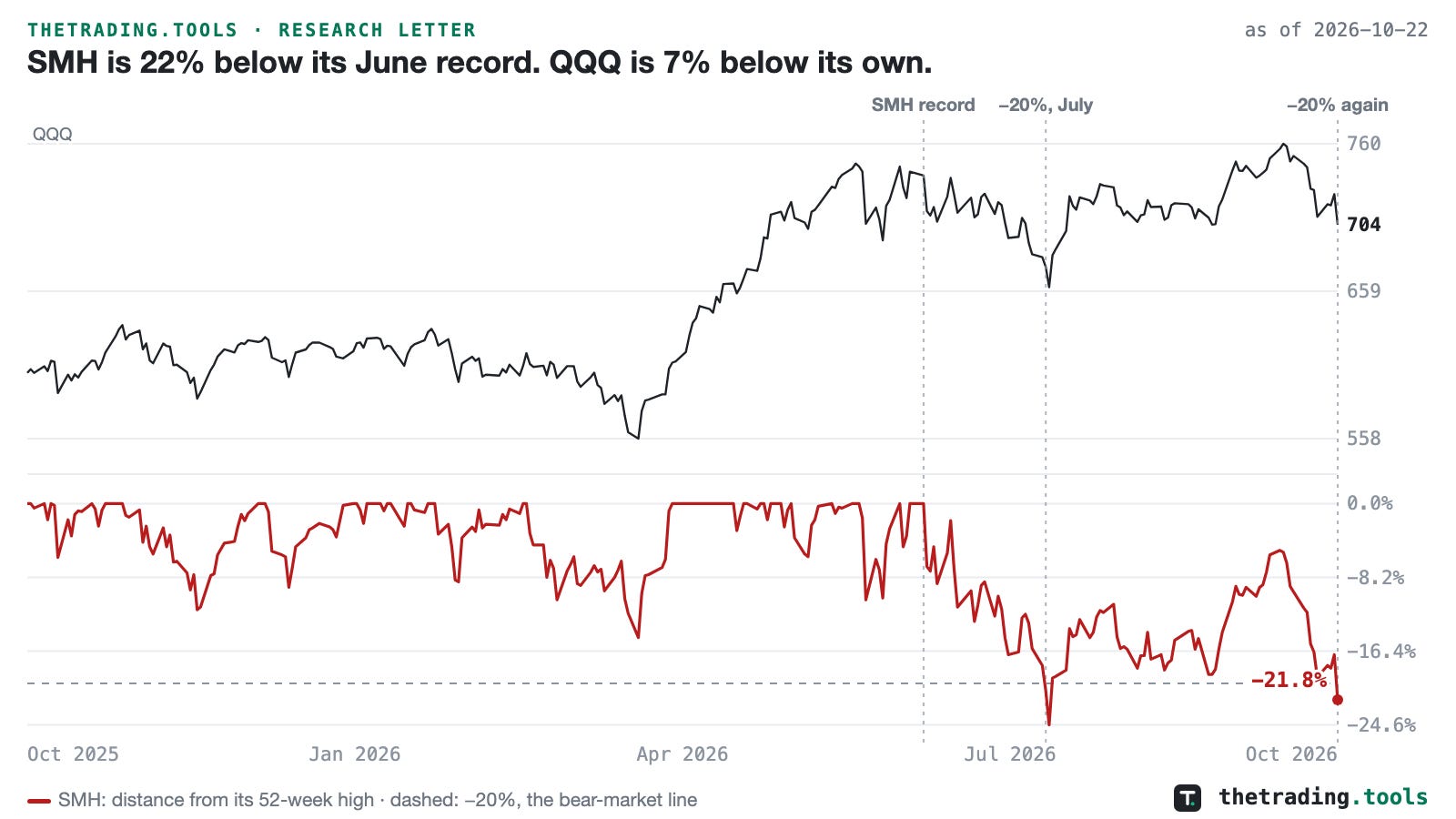
SMH closed 22% below its June record on Thursday. Six times since 1995 chips broke down with the Nasdaq near its high. It finished higher a year later in five, but four fell another 10% first.
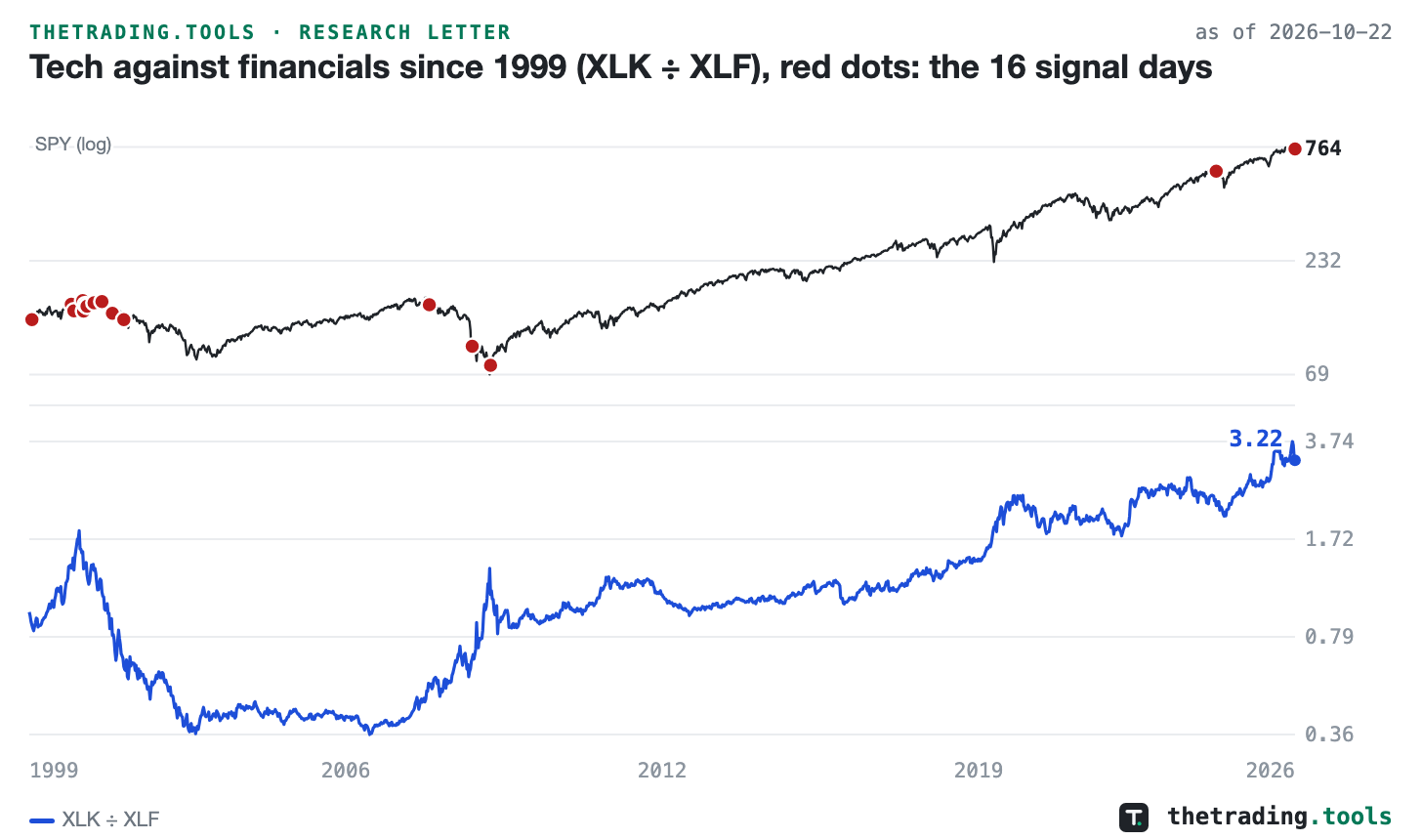
A 3% drop in tech stocks is usually bought. On the rare days the money moves into banks instead, the next three months have been rough far more often.
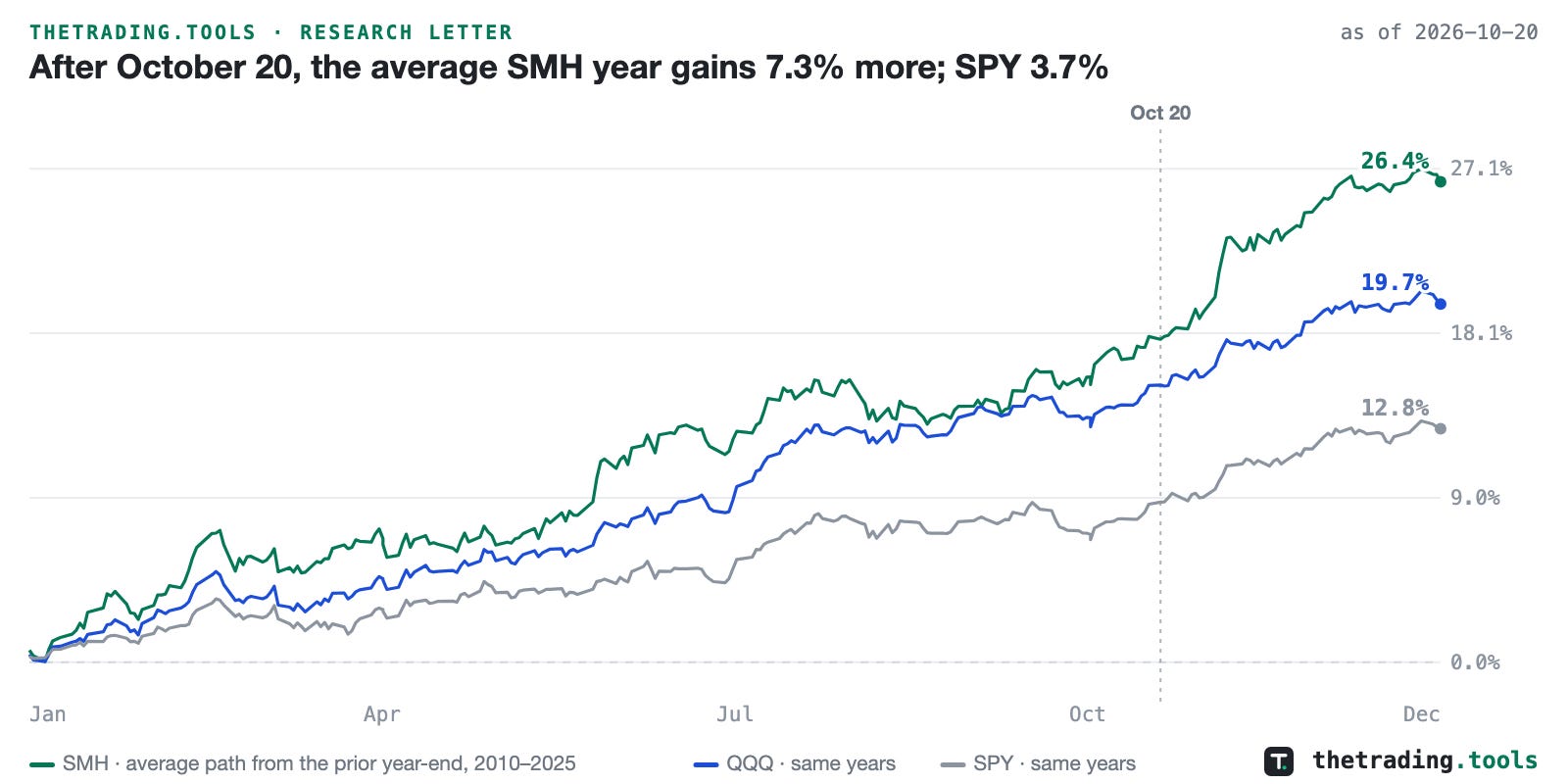
SMH starts the year-end stretch 18% below its June high. In a bad year, a bruise like that meant a weak finish. After a strong year, chip stocks rose to year-end four times in five.
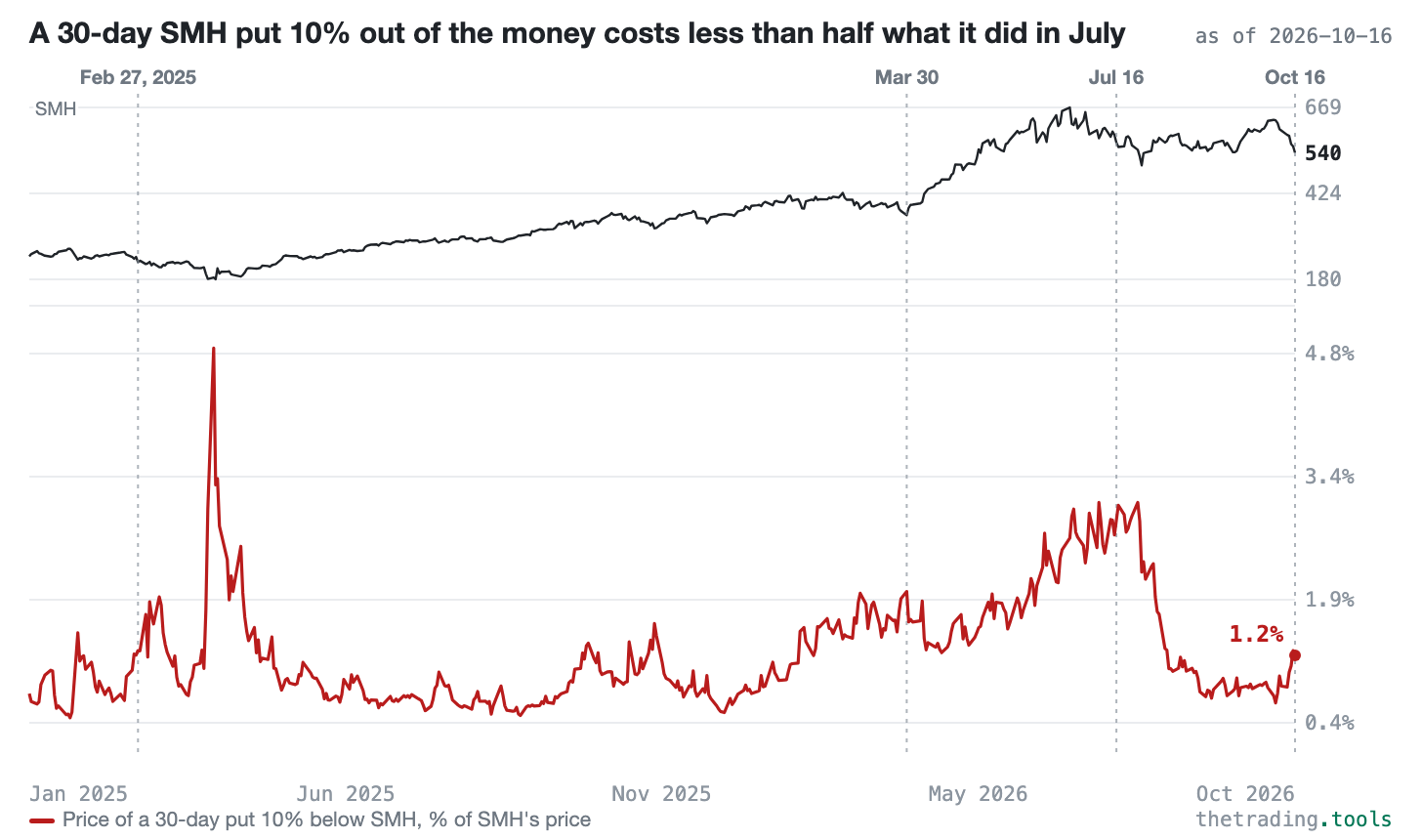
Chips fell 15% in nine sessions and crash puts cost half July's price. Against the S&P 500, though, semis made a lower high and sit 21% off their June peak.
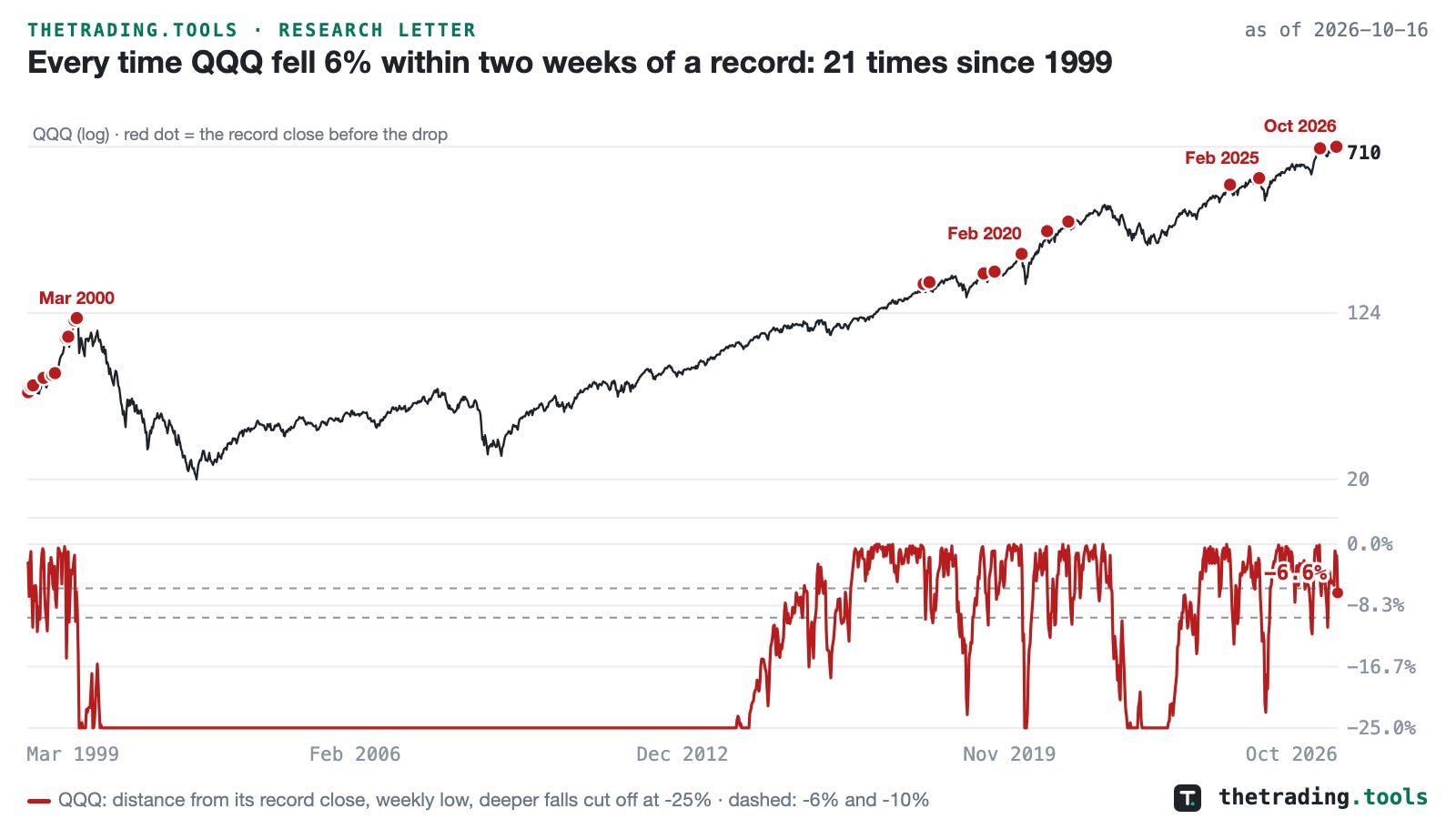
Seventeen of those drops were routine pullbacks that ended at a new record. The other three were the dot-com peak, the Covid crash and the 2025 tariff correction.
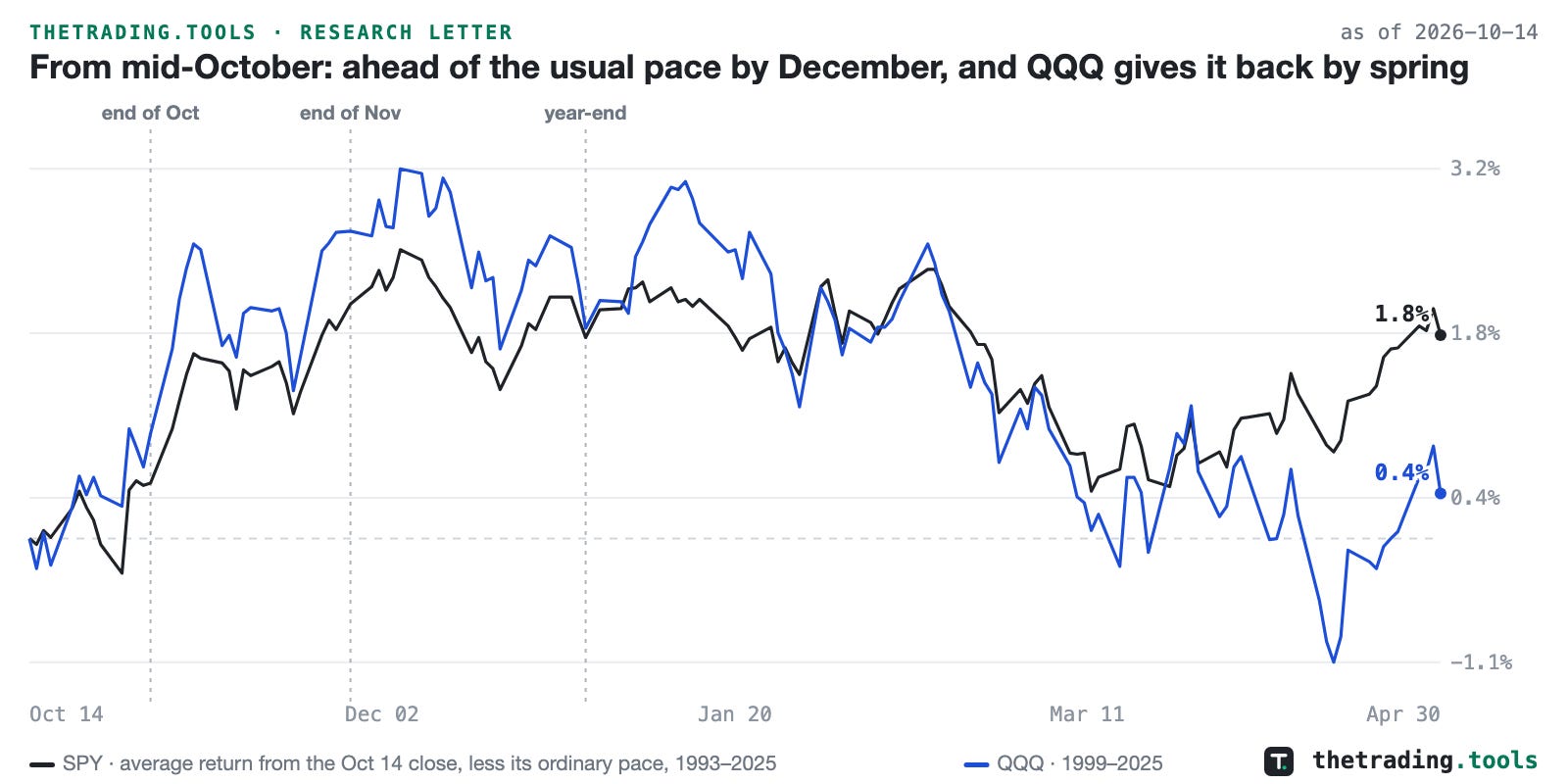
From mid-October, SPY and QQQ have beaten an ordinary stretch by about two points into year-end. Nearly all of it comes in one month, and the old late-December rally has gone quiet.
Small caps just closed 11% below their record with the S&P 500 a point from its own. That split usually heals. The times it didn't, bond yields were rising, as they are now.
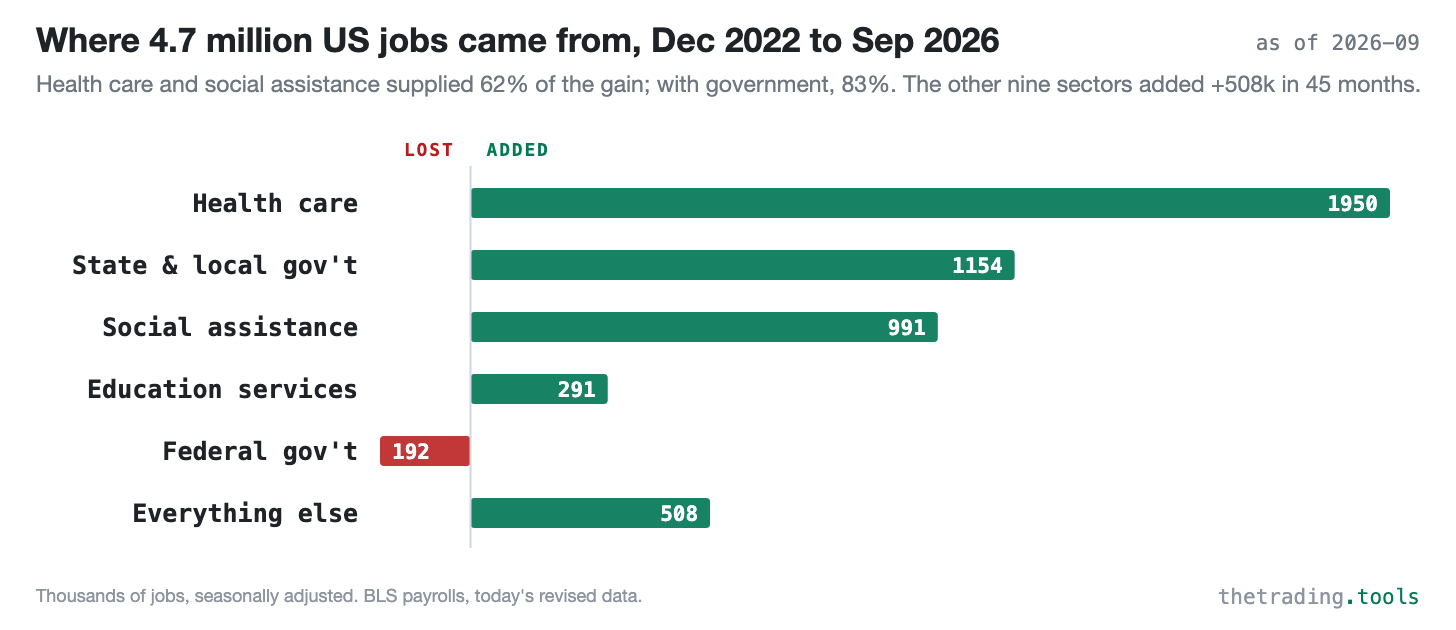
Hospitals, home care and government supplied 83% of US job gains since 2022. The other nine sectors shrank for two years. Now they are hiring again, which matters more than the headline.
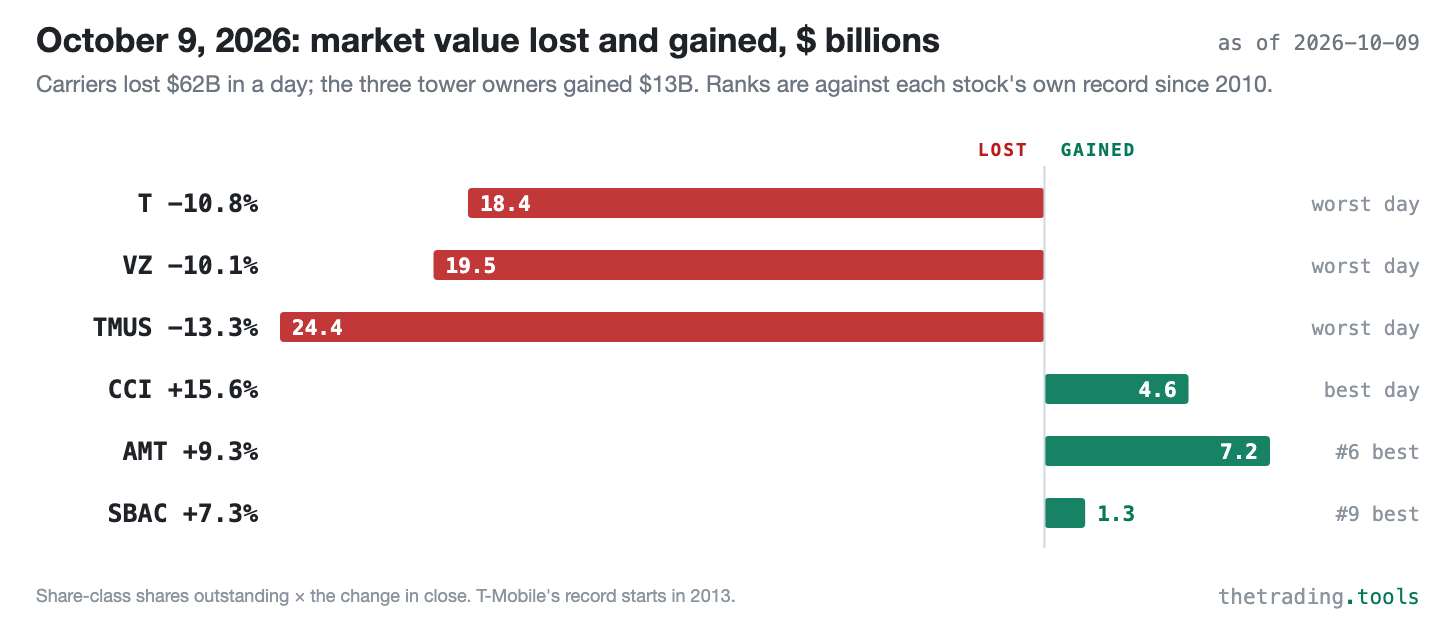
SpaceX's spectrum deal took $62 billion off AT&T, Verizon and T-Mobile in one session and added $13 billion to the tower owners. I think the market got the carriers right and the towers wrong.
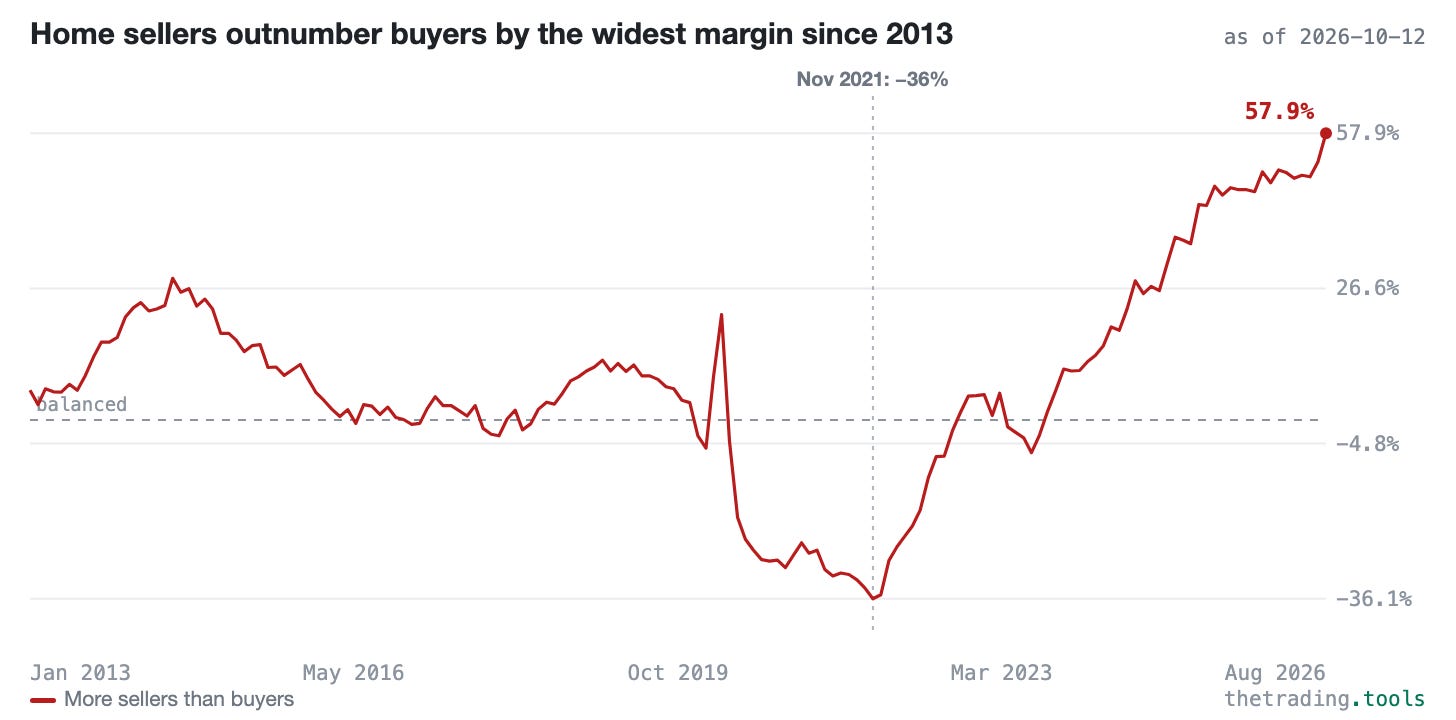
Sellers outnumbered buyers by 58% in August, the widest gap since 2013. Prices are already falling across the Sun Belt. Here is why the national number holds, and what comes next.
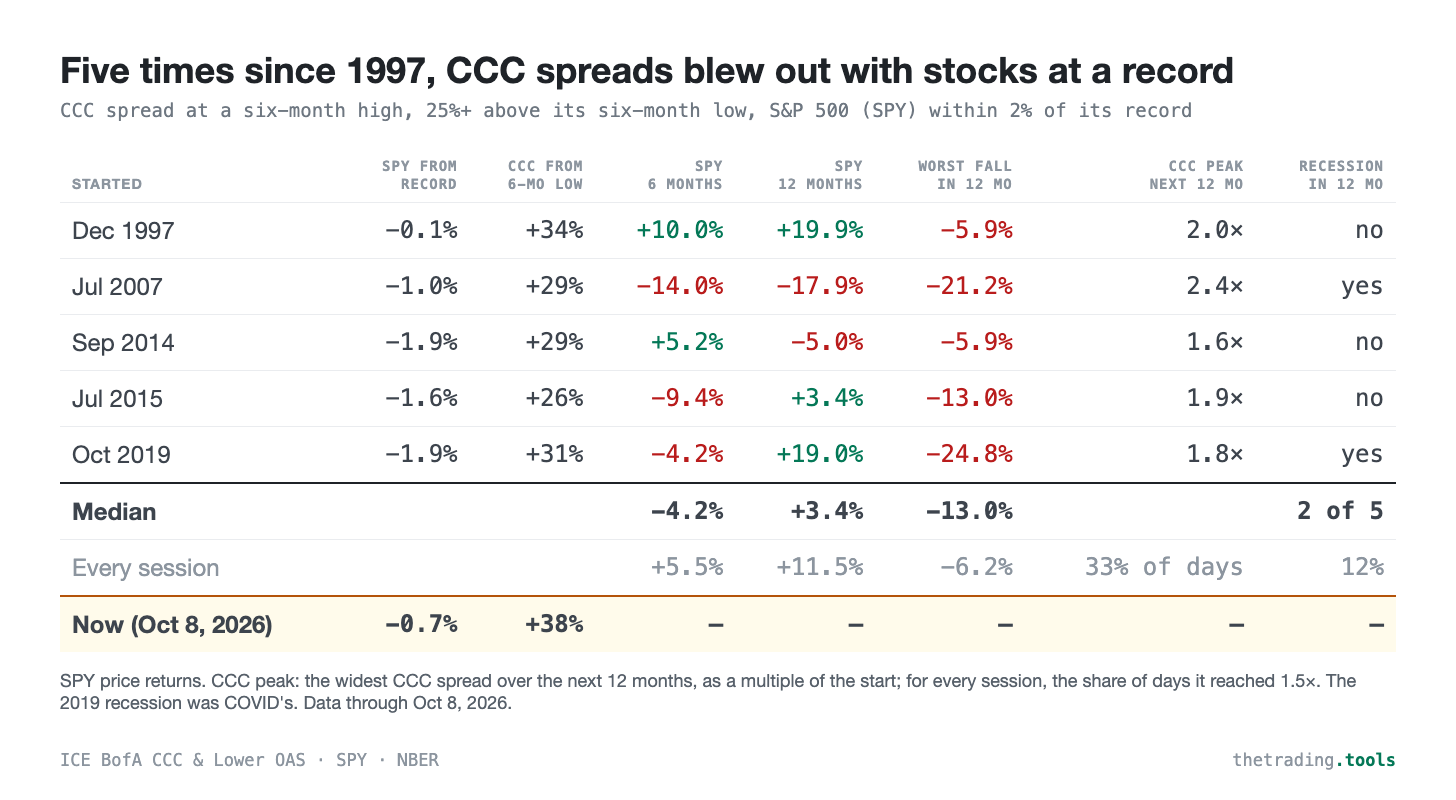
CCC spreads jumped 38% from their May low with the S&P 500 near its high. History says a weaker year and more widening ahead. What set 2007 apart is still missing.
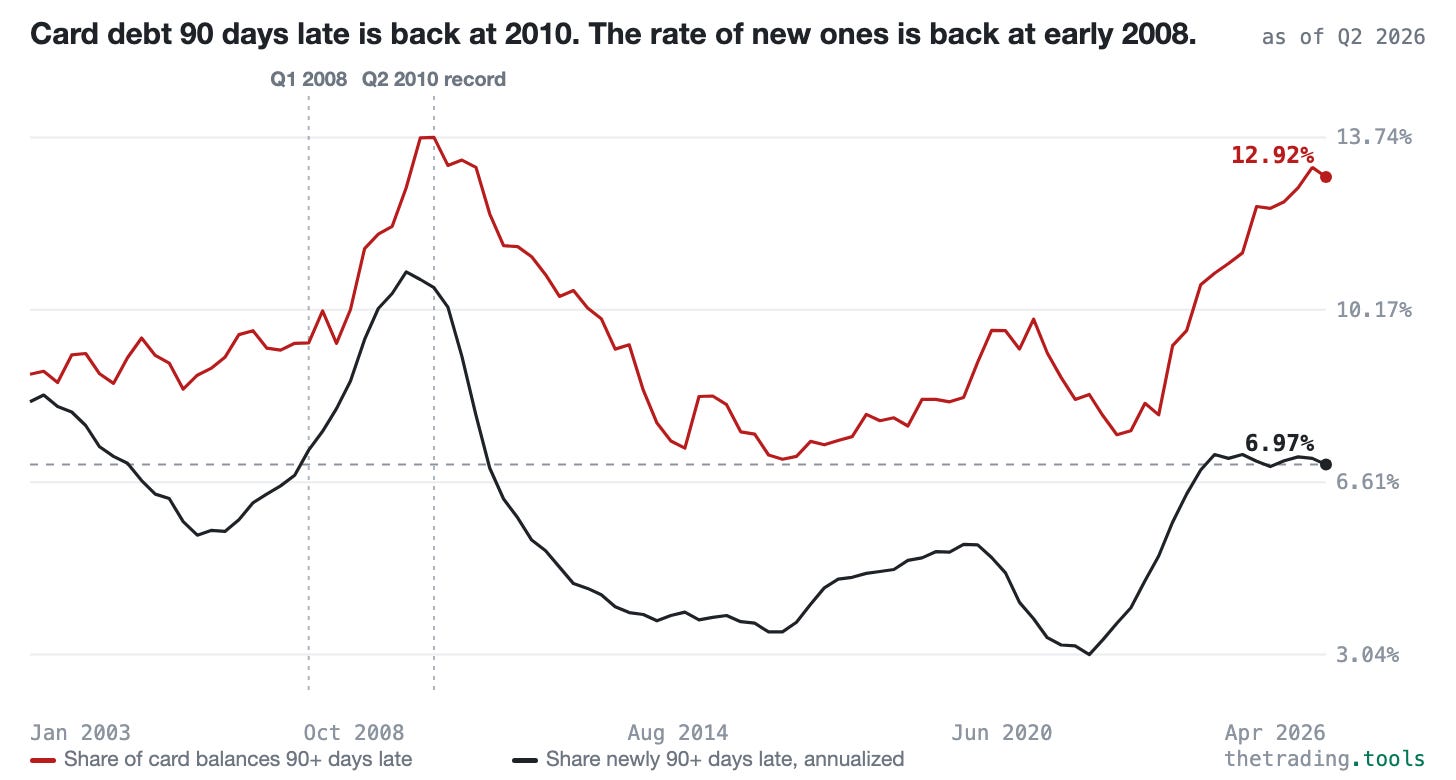
The share of card balances 90 days late is back at its 2010 level with the S&P at a record. That figure overstates the damage. The rate of new delinquencies is the real problem.