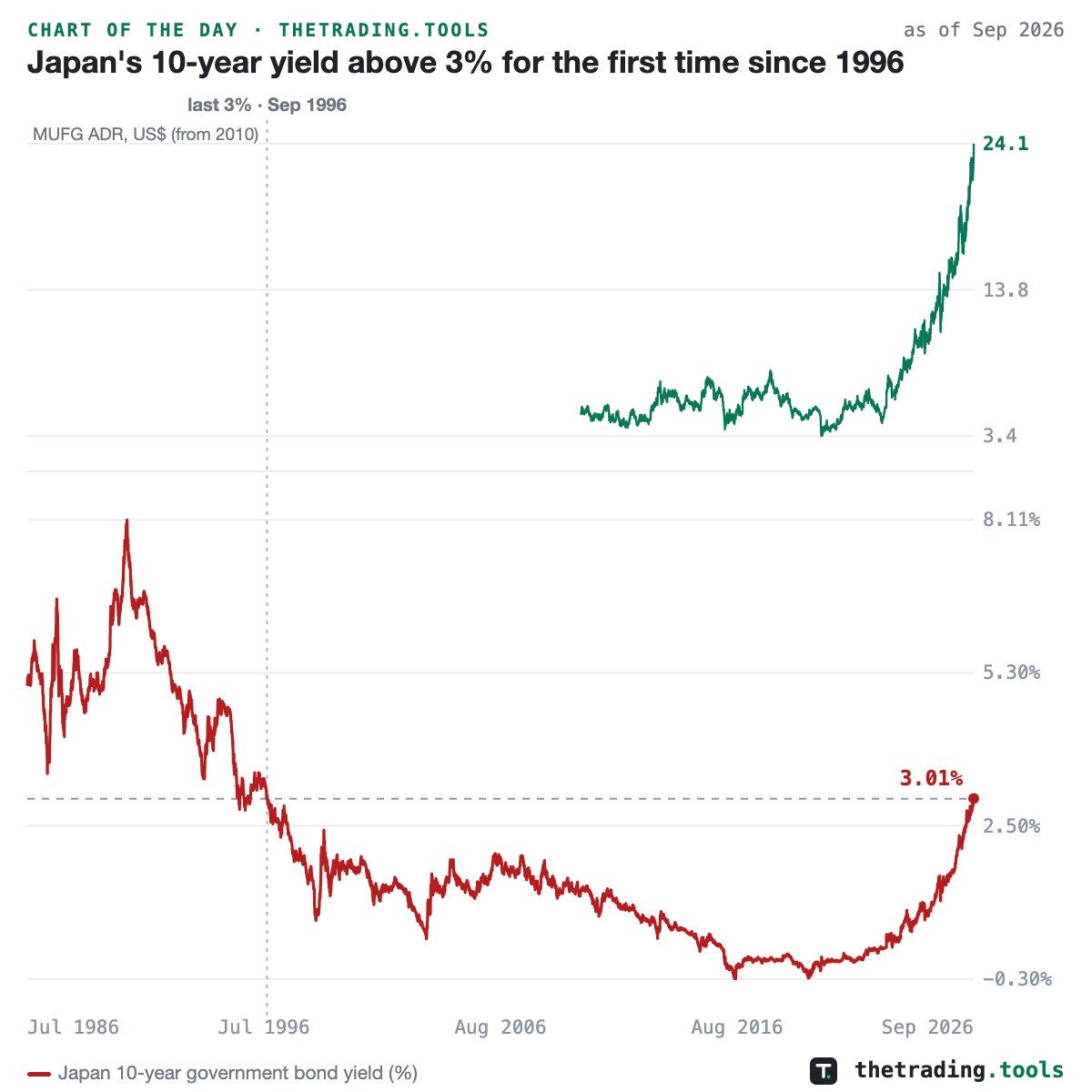
Japan’s 10-year yield is above 3% for the first time since 1996
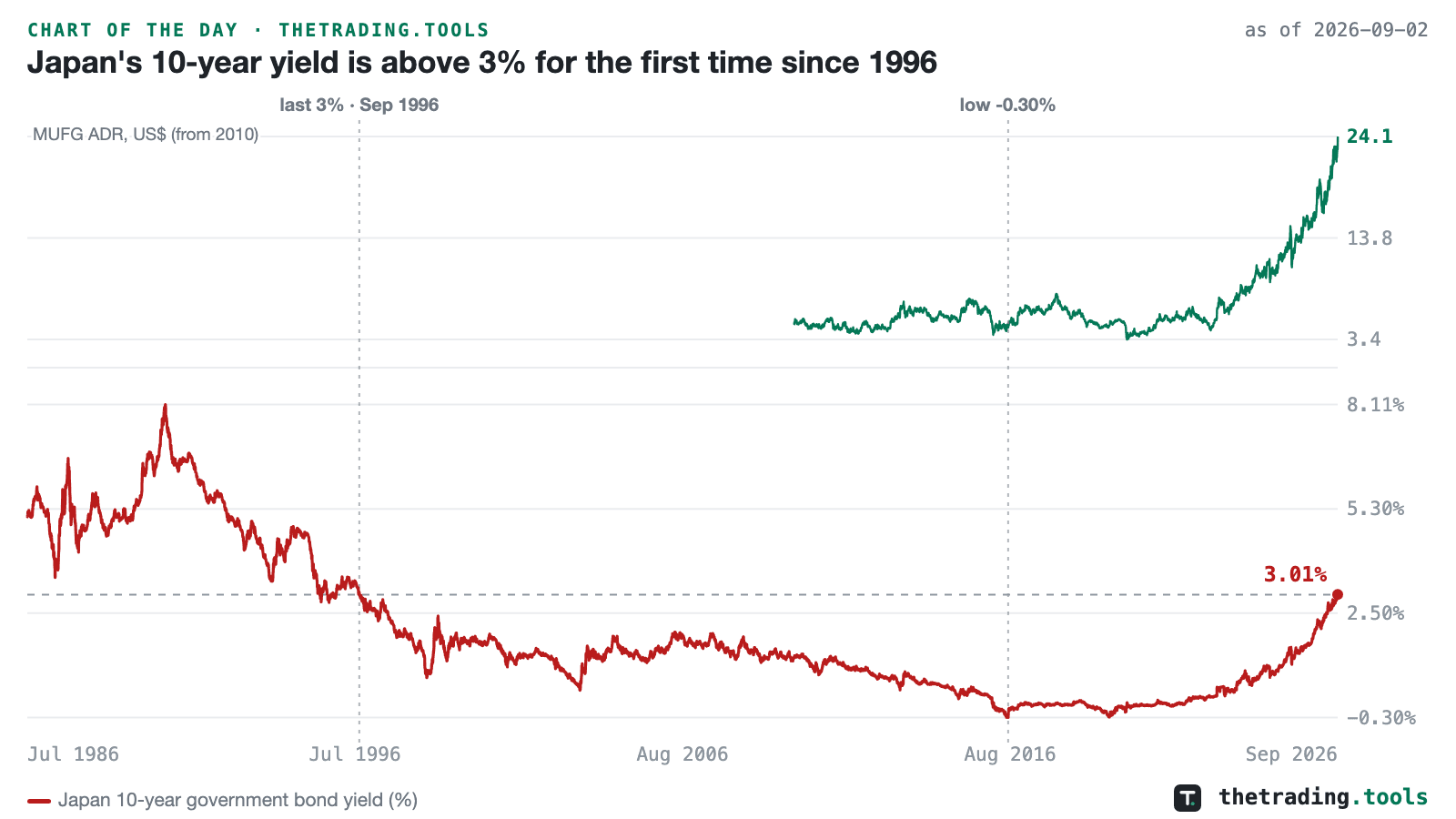
Japan’s 10-year government bond yield closed at 3.006% on September 2, 2026. The last close at or above 3% was September 6, 1996, thirty years ago. In between, the yield spent most of two decades under 2%, and it bottomed at -0.297% on July 27, 2016, when the Bank of Japan held it below zero. The move from that low to today has taken ten years, and the last year has done most of the work: the yield is up 1.39 points from a year earlier.
The banks that lend at that rate are at the highest closes their New York listings have recorded since at least 2010, which is where the files begin. MUFG closed at $24.13 on September 3, up 52.1% this year; Sumitomo Mitsui is up 42.6% and Mizuho 54.6%. A bank’s margin widens when it can lend at 3% against deposits that still pay close to nothing, and the market has priced that. What the chart does not say is where the yield stops, or what a 3% Japanese yield does to the money that left Japan when it paid nothing. Both are the questions worth carrying.
Japan 10-Year Yield — the live series and its history
This chart is a frozen capture — the numbers above are as of Sep 2, 2026 (yield) and Sep 3, 2026 (ADRs) and will not update. The live page recomputes daily from the same dataset. A square version of this chart is available for feeds that crop landscape images.