Stocks are priced to earn about one point over bonds, the thinnest since 2002
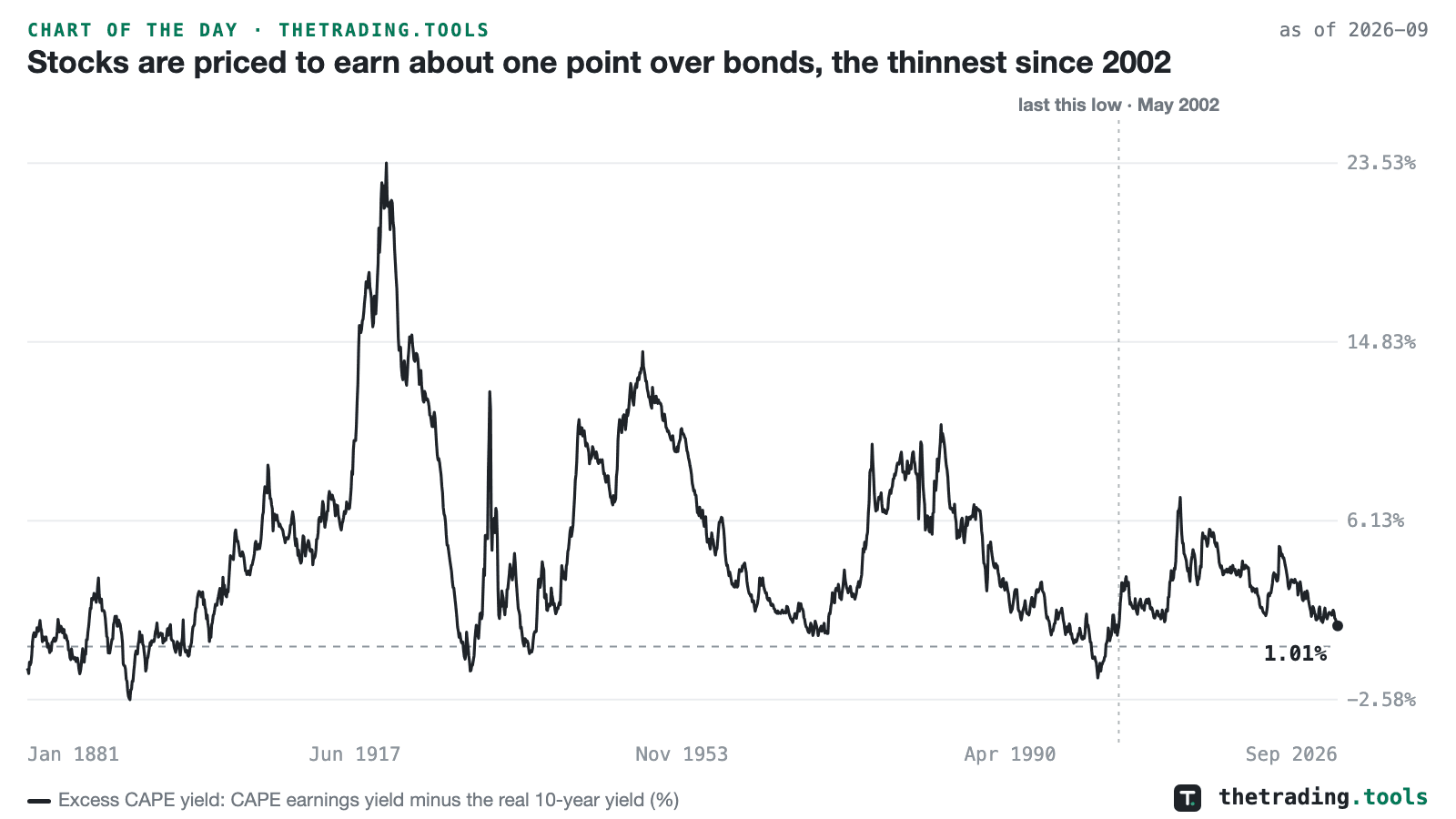
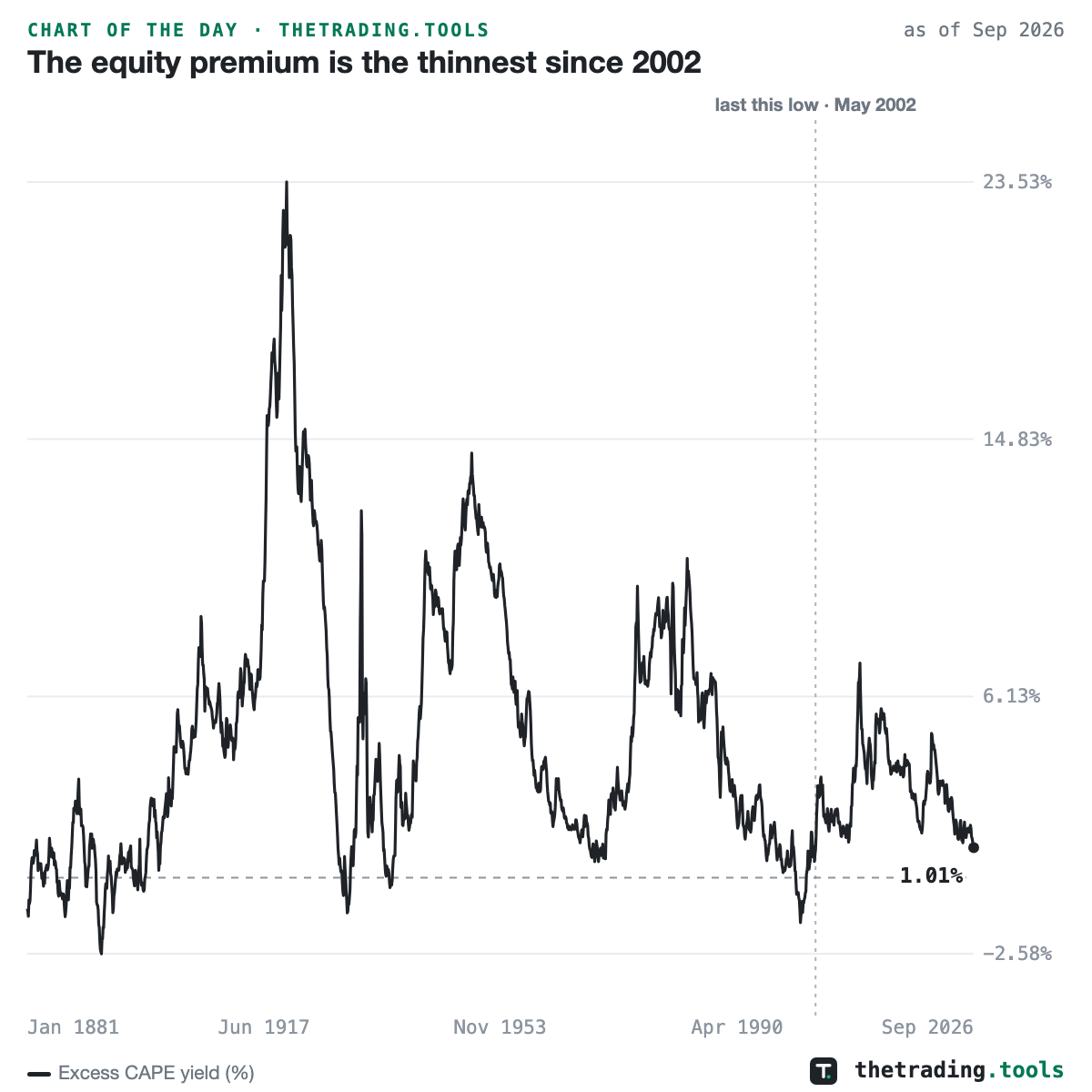
The excess CAPE yield is the cyclically adjusted earnings yield on the S&P 500 minus the real 10-year Treasury yield. It is Robert Shiller’s answer to the objection that a high CAPE means nothing while bonds pay little. For September 2026 it is 1.01%. The last month it was lower was May 2002, in the aftermath of the dot-com bust. The CAPE itself stands at 40.6, so the earnings yield is about 2.5%, and a real 10-year yield near 1.5% takes most of it.
The series runs back to January 1881, and today’s reading is not a record. It went to -1.52% in January 2000 and to -2.58% in June 1892, so the index has been priced to earn less than bonds before, and it did. What the number describes is the premium a decade of owning the index is being priced to return over a decade of owning the bond, and that premium is now about one point. It says nothing about the next month. It has, historically, said a good deal about the next ten years, and the two occasions it was this thin were not good ones to start from.
Shiller CAPE — the live ratio, the excess yield and their histories
This chart is a frozen capture — the numbers above are as of September 2026 (Shiller monthly data) and will not update. The live page recomputes daily from the same dataset. A square version of this chart is available for feeds that crop landscape images.